



How Ore Type Affects Grinding Ball Wear
14.07.2026
How mill liners affect grinding ball wear
04.08.2026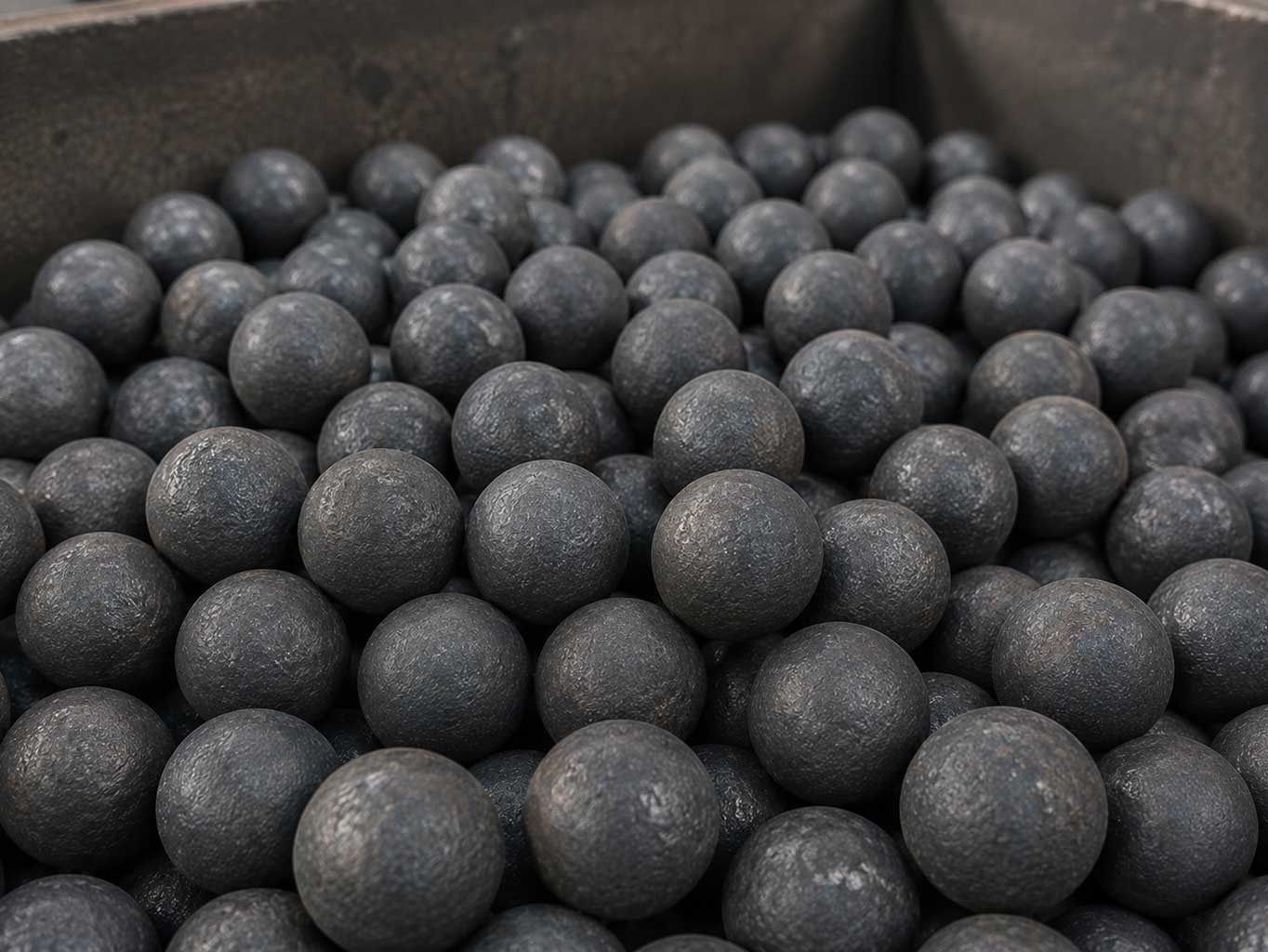
Grinding balls are one of the key consumables in the grinding process. However, their selection is often based on simplified approaches that do not take into account all the factors affecting mill performance. Let us consider the five most common mistakes.
Mistake No. 1. Evaluating Balls Solely by Hardness
Hardness directly affects the wear resistance of grinding balls under abrasive conditions. However, it is not the only factor determining the service life of grinding media.
Increasing hardness is often accompanied by reduced impact toughness. As a result, the balls may become more susceptible to cracking and failure under impact loads.
In practice, grinding ball performance is determined by the optimal balance of hardness, strength, and impact resistance.
Mistake No. 2. Assuming That the Same Hardness Means the Same Quality
Hardness values shown in a certificate do not provide complete information about the operational properties of grinding balls.
Their behavior in a mill is influenced by the steel's chemical composition, microstructure, manufacturing technology, heat-treatment quality, and hardness uniformity throughout the cross-section.
This is why balls with identical hardness values may demonstrate different consumption rates and service lives.
Mistake No. 3. Ignoring the Impact of Process Conditions
The wear of grinding balls depends not only on their properties but also on operating conditions.
Key factors include ore abrasiveness and mineralogical composition, feed size distribution, slurry parameters, pH level, mill rotational speed, and operating mode.
In wet grinding processes, corrosion-mechanical wear also contributes significantly, meaning that the same grinding ball may perform differently at different plants.
Mistake No. 4. Drawing Conclusions from a Single Trial
Comparing suppliers based on a single test period is not always reliable.
Test results are influenced by changes in ore characteristics, mill operating conditions, and the composition of the ball charge. In addition, new balls operate alongside already worn grinding media of different diameters, which also affects the results obtained.
For an objective assessment, it is necessary to analyze not only the specific consumption of grinding balls but also mill productivity, energy consumption, and the particle size distribution of the final product.
Mistake No. 5. Failing to Reassess Ball Selection Over Time
Even optimally selected grinding balls may lose effectiveness due to changes in process conditions.
Changes in ore characteristics, mill throughput, grinding circuit configuration, or final product requirements affect the optimal operating conditions of the ball charge.
Therefore, monitoring grinding ball consumption and conducting periodic comparative trials remain essential elements of grinding cost management.
In conclusion, most mistakes in selecting grinding balls are related to attempts to evaluate them based on a single parameter or short-term test results. Experience shows that grinding media performance is determined by a combination of metallurgical characteristics, operating conditions, and suitability for a specific grinding process. Only a comprehensive approach allows the lowest long-term grinding cost to be achieved.