



How wear-resistant grinding balls reduce waste and resource consumption
18.05.2026
Euro Mine Expo 2026 trip summary
05.06.2026When selecting grinding balls, the grindability of the ore is taken into account and is evaluated using the Bond Work Index (BWI). This indicator reflects the energy required for grinding and depends on the mineralogy, structure, and fracture characteristics of the material.
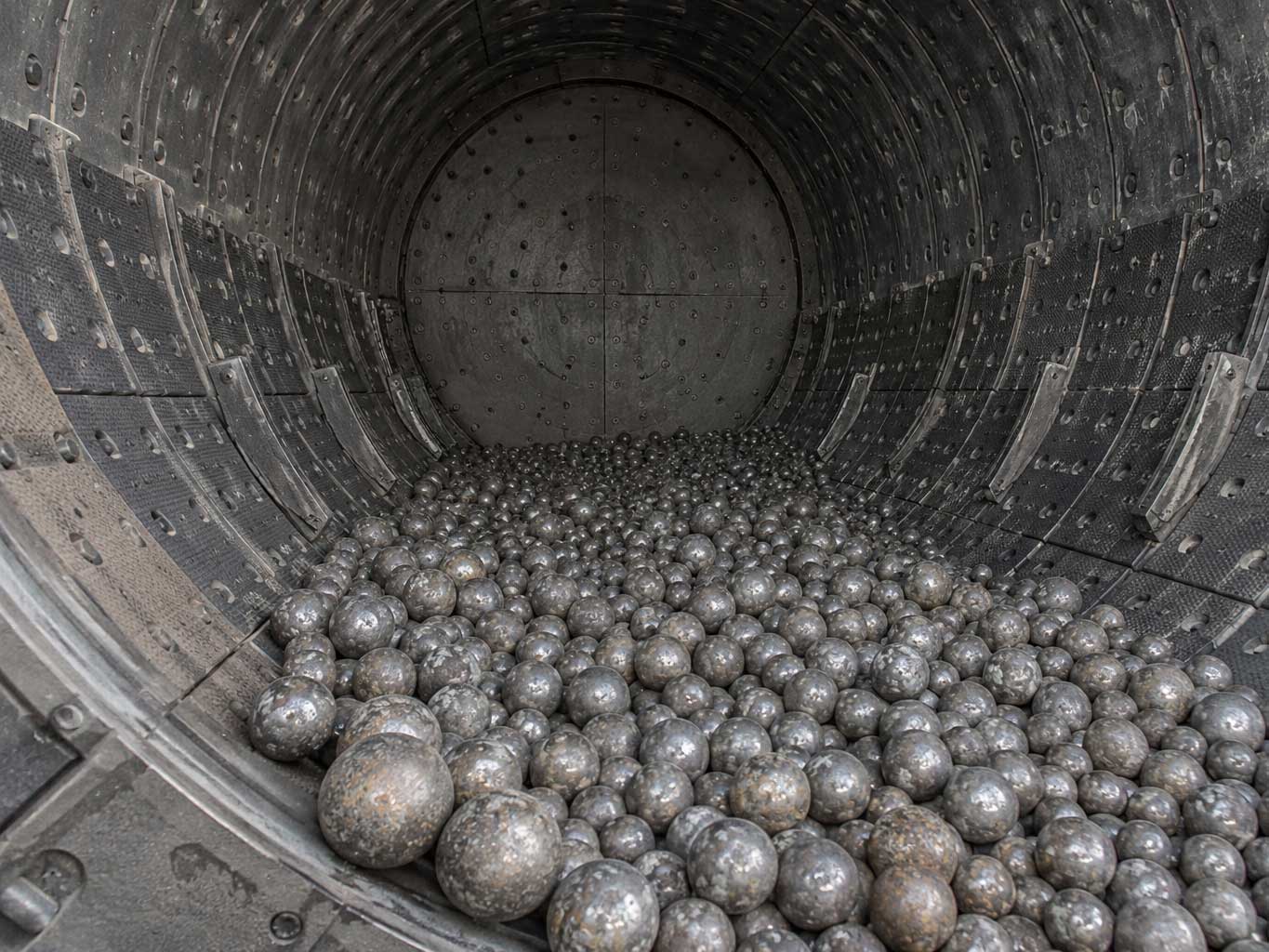
The diameter of the balls is selected considering the BWI, feed size (F80), grinding stage, and mill type. For coarse grinding and coarse feed, larger diameter balls are used to ensure impact breakage. At fine grinding stages, smaller diameter balls are more effective, increasing the role of abrasion.
It is optimal to use a mixed ball charge with a controlled size distribution. This provides a balance between impact and abrasive grinding mechanisms and improves mill efficiency.
Ore abrasiveness is a separate critical factor. Even with a medium BWI, highly abrasive materials cause intensive wear, requiring the use of balls with increased wear resistance (appropriate chemical composition and heat treatment).
Additionally, the mill operating conditions must be considered: filling degree, rotation speed, liner design, and pulp density, as they affect ball loading and wear.
Conclusion: there is no universal solution – the ball charge must be selected according to the specific grinding conditions. This allows reduction of ball and energy consumption while stabilizing productivity.