




Euro Mine Expo 2026 trip summary
05.06.2026
Energosteel Plant LLC Confirmed Compliance of Its Quality Management System with ISO 9001:2015
30.06.2026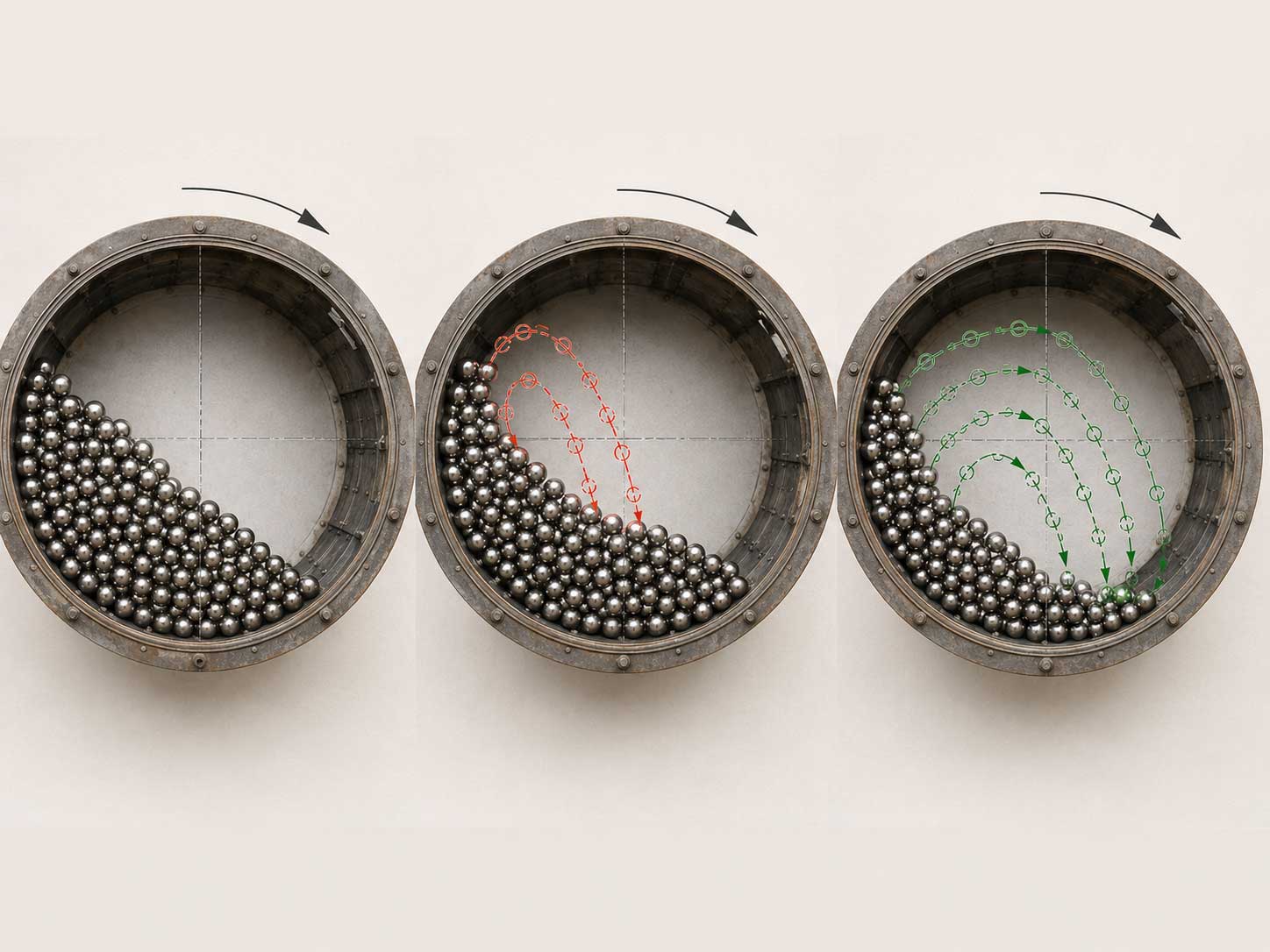
The wear of grinding balls is largely determined by the mill operating mode, which depends on the ratio of the mill rotation speed to the critical speed and determines the motion pattern of the balls inside the drum.
The critical speed of a mill is the rotational speed at which the balls stop falling and begin to “stick” to the mill lining due to centrifugal force. The critical speed depends on the mill diameter:
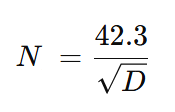
where:
N – critical speed (rpm)
D – internal working diameter of the mill, m
At low rotational speeds (≈50–60% of the critical speed), the cascading mode occurs. The balls roll along the liner without detaching, and abrasive wear predominates. In this mode, wear is relatively uniform; however, the intensity of impact grinding decreases, which may reduce the overall process efficiency, especially for coarse material.
In the range of 65–80% of the critical speed, a cascading-cataracting (mixed) mode is formed, which is generally considered optimal. Part of the balls enters free fall, and an impact component appears in the interaction with the material. This provides a rational combination of impact and abrasive grinding mechanisms. In this mode, the minimum specific ball wear (per unit of grinding) is usually achieved together with maximum grinding efficiency.
With a further increase in speed (≈80–90%), the cataracting mode intensifies. The lifting height and impact energy of the balls increase, the share of impact loads rises, and the intensity of ball-to-ball interaction grows. This leads to accelerated wear, increased contact stresses, and a higher risk of ball breakage.
When approaching the critical speed (>90%), centrifuging occurs: the balls are pressed against the liner and practically stop falling. In this case, the impact grinding mechanism is almost absent, process efficiency drops sharply, and the wear pattern changes – it is determined mainly by sliding and friction against the liner and may decrease compared to intensive impact modes.
In summary, balls generally experience the lowest wear when the mill operates at approximately 70–80% of the critical speed. If the speed is lower or higher, wear increases. At the same time, actual wear depends not only on speed, but also on material properties, ball quality and size, mill filling, liner condition, and grinding conditions (dry or wet).